Exploring Different Music Genres: A Beginner’s Guide
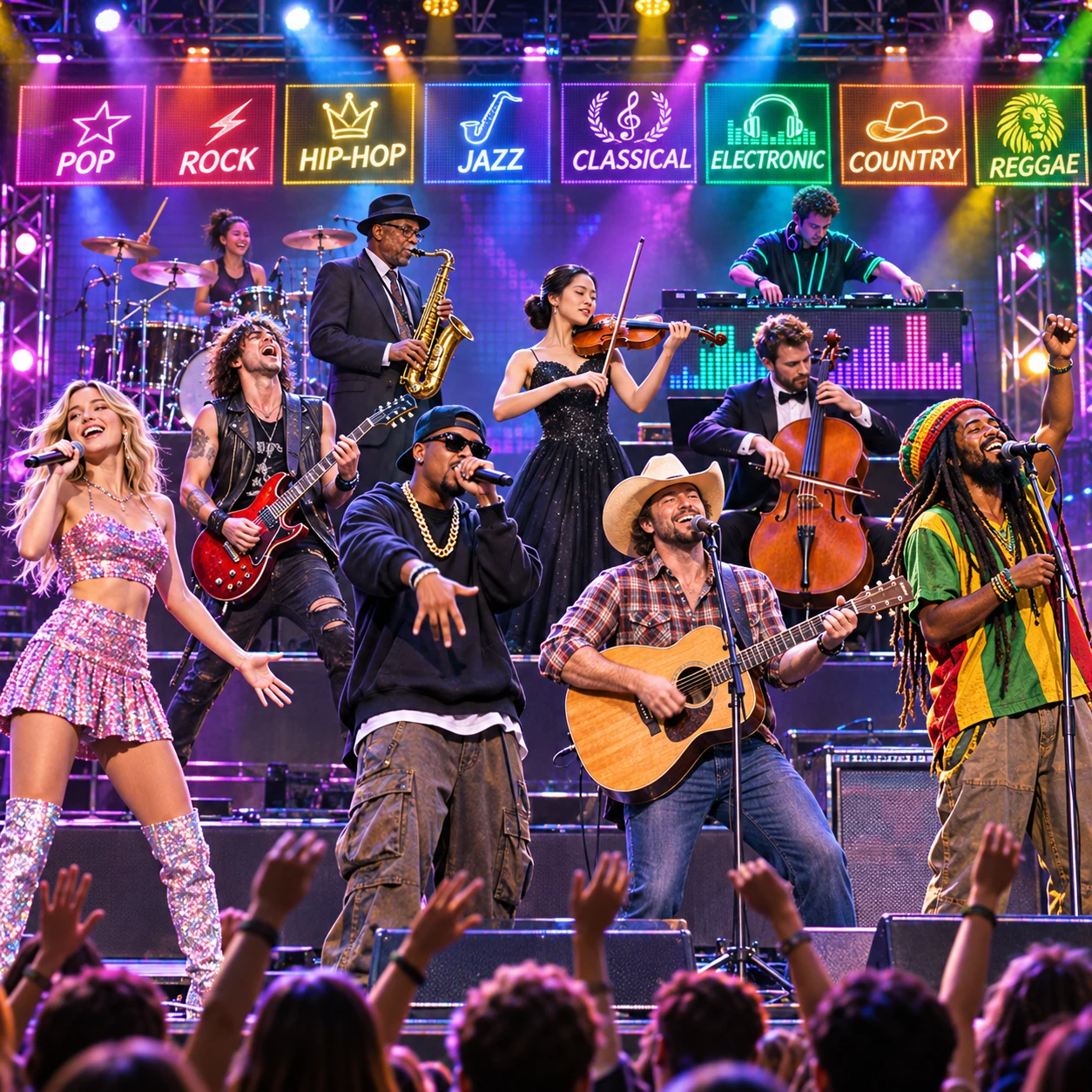
Music genres offer a useful starting point when you’re choosing what to hear, but they’re not strict rules. Pop, rock, hip-hop, R&B, jazz, classical, electronic dance music (EDM), country, and reggae each have recognizable sounds and histories, yet artists often borrow across them. A little listening, guided by a few artists and tracks, can help you find styles that feel new without making exploration feel like homework.
What Makes a Music Genre?
A music genre is a broad category shaped by sound, instrumentation, history, and culture. It helps listeners describe what they hear, though genre boundaries are flexible and often debated.
Some clues are immediately audible: a country song might feature twangy guitar and a story-led vocal, while a jazz performance may leave room for improvisation. Production and rhythm matter too. Electronic dance music often builds around programmed beats and repeating patterns; hip-hop commonly centers on rap, rhythm, and beat-making.
Genres also carry histories and communities. Reggae, for example, is closely associated with Jamaican music and culture. Jazz developed through African American musical traditions in the United States. Those contexts matter, but no short description can capture the full range of a genre or the people who shaped it.
Think of genre labels as maps, not borders. They help you navigate a huge musical landscape, but a song can sit between categories. One listener might call a track pop-rock; another might hear its R&B production first. Both descriptions can be useful.
A Quick Tour of Popular Music Genres
Popular music genres differ in their typical rhythms, sounds, and listening moods, but each contains many styles. Use these descriptions as starting points rather than definitions that every song must follow.
- Pop: Often built around clear melodies, memorable choruses, and concise song structures. Pop absorbs ideas from other styles, so its sound changes with each generation.
- Rock: Frequently driven by electric guitars, bass, and drums, with energy ranging from gentle to loud. Rock spans subgenres such as indie rock, punk, and alternative rock.
- Hip-hop: A broad culture and musical form associated with rap, beats, sampling, and distinctive production. Its rhythms and vocal approaches vary widely.
- R&B: Short for rhythm and blues, R&B has evolved through many eras. Contemporary R&B often blends expressive vocals with influences from pop, hip-hop, and electronic music.
- Jazz: Known for improvisation, varied rhythms, and musicians responding to one another in performance. Its many branches include swing, bebop, and jazz fusion.
- Classical: A broad term for traditions of composed music, often performed by orchestras, chamber groups, soloists, or singers. It ranges from intimate piano works to large-scale symphonies.
- EDM: Electronic dance music covers styles made for clubs, festivals, and home listening. House and techno are two distinct examples, with different approaches to rhythm and atmosphere.
- Country: Often foregrounds storytelling and vocals, with sounds that may include acoustic guitar, fiddle, or steel guitar. Modern country also draws on pop and rock.
- Reggae: A Jamaican-rooted genre recognized by many listeners for its characteristic offbeat rhythms. Artists have developed it in varied directions, and its influence travels across musical styles.
Even within a single genre, the mood can shift. A slow jazz ballad and an energetic improvisation sound very different; so can acoustic country and polished country-pop. Exploring subgenres is one way to follow those differences without needing to memorize a taxonomy.
Artists and Sounds to Start With
To explore music genres, start with one accessible artist or track in each style, then follow the sound or story that catches your attention. The suggestions below are entry points, not definitive rankings.
- Pop: Try Michael Jackson’s “Billie Jean” for a focused groove and instantly recognizable chorus.
- Rock: Listen to Fleetwood Mac’s “Go Your Own Way” for guitar-led songwriting and a strong band performance.
- Hip-hop: Kendrick Lamar’s “Alright” offers a starting point for hearing how rap, production, and message can work together.
- R&B: Beyoncé’s “Cuff It” is a lively introduction to contemporary R&B with pop and dance influences.
- Jazz: Miles Davis’s “So What” gives newcomers room to notice the interplay between instruments and the relaxed, exploratory feel.
- Classical: Try the first movement of Beethoven’s “Symphony No. 5” and listen for how a musical idea returns and develops.
- EDM: Daft Punk’s “One More Time” pairs electronic production with a strong dance-floor pulse.
- Country: Dolly Parton’s “Jolene” is a clear example of how a compelling vocal and story can carry a song.
- Reggae: Bob Marley and the Wailers’ “Three Little Birds” offers an approachable introduction to reggae’s relaxed rhythmic feel.
These tracks can open doors, but one song can’t represent an entire genre. If you like the lyrics, explore that artist’s catalog; if the rhythm stands out, search for a playlist focused on that sound. Pay attention to what you respond to: voice, beat, instruments, production, or mood.
Where Genres Overlap and Change
Genres overlap when artists combine sounds, instruments, or songwriting approaches associated with different traditions. These combinations help music evolve, while labels catch up after listeners and musicians have already noticed something new.
A pop song might use hip-hop production; rock musicians may incorporate electronic textures; and country artists may write and record with pop structures. Jazz fusion deliberately brings jazz improvisation into contact with other sounds. These are broad examples, not fixed formulas.
New styles often develop through a mix of influences, technology, and local scenes. Artists hear music from different places, experiment with instruments or recording tools, and shape those elements into something personal. A subgenre can emerge when listeners recognize a recurring set of traits, though there may be disagreement over what to call it.
Listen for ingredients rather than labels. When a track feels like a blend, ask what you hear: Is the rhythm electronic? Does the vocal use an R&B style? Are the guitars rooted in rock or country? This kind of listening makes genre overlap easier to understand and helps you discover artists beyond familiar categories.
How to Find the Genres You’ll Love
You can find genres you enjoy by exploring in small, deliberate steps: choose a theme, listen across a few styles, and follow the details that appeal to you. A short session with a clear focus works better than trying to learn everything at once.
- Start with one listening clue. Pick a mood, instrument, or activity, such as energetic drums, expressive vocals, or music for a quiet evening.
- Build a short playlist. Choose three to five tracks from different genres that share that clue. Compare how each artist creates a similar feeling.
- Follow one connection. If you like a guitarist, look for artists they cite as influences. If you like a beat, explore the producer’s other work or related subgenres.
- Try a live performance. Concerts, local shows, and recorded sessions can make a genre’s energy and interaction easier to notice. Live music may sound different from studio recordings, and that contrast is part of the experience.
- Keep a simple listening note. Write down one thing you liked and one thing you didn’t. That gives your next search a useful direction.
There’s no need to finish an album or force yourself to like a style. Give unfamiliar music enough attention to hear its character, then move on if it doesn’t connect. Playlists are convenient, but they can steer you toward familiar sounds; deliberately choosing one unfamiliar artist helps keep your listening broad.
Keep Exploring Beyond the Labels
The best way to keep discovering music is to stay curious about artists, songs, and sounds rather than treating genre names as rules. Labels can help you find a starting point, but your own listening experience matters more.
Try an unfamiliar subgenre, revisit an old favorite, or listen to an artist’s influences alongside their latest work. Music news, interviews, live recordings, and album notes can add context about how a sound developed. Over time, you may find that the music you love sits across several categories.
That’s a useful outcome, not a classification problem. Let a genre introduce you to a sound, then follow the music wherever it leads.
Frequently Asked Questions
What is the difference between a genre and a subgenre?
A genre is a broad musical category, such as rock or jazz. A subgenre is a narrower style within it, such as punk rock or bebop, with its own recognizable traits and history.
Can one artist belong to more than one genre?
Yes. Artists can change styles over time or blend influences within the same song. Genre descriptions are useful ways to discuss music, not exclusive identities that every artist must fit.
What genre should a beginner explore first?
Start with a genre connected to something you already enjoy, such as a strong melody, a particular rhythm, or expressive vocals. Then sample a few related styles and see which artists hold your attention.
How do music genres develop over time?
Genres develop as musicians draw on existing traditions, respond to new tools and sounds, and create music within evolving communities. Listeners and critics may later use a label for patterns they hear, but genre names can remain flexible and contested.