Behind the Scenes: A Day in the Life of a Music Producer
What Does a Music Producer Actually Do?
A music producer is the architect of a song — responsible for shaping its sound, guiding its emotional direction, and making countless decisions that listeners never consciously notice. They sit somewhere between a film director and a head chef: they rarely play every instrument or sing every note, but nothing sounds right without their vision holding it together.
The confusion is understandable. Many people picture a producer as someone hunched over turntables or performing on stage. In reality, the role spans creative, technical, and business territory all at once. A producer might spend one hour crafting a beat from scratch in their DAW, the next hour coaching a nervous vocalist through a difficult take, and the hour after that answering emails about royalty splits.
Some producers are tied to major record labels, working on high-budget projects with full teams. Others operate independently from a home studio, releasing music on their own terms. The setting changes — the core responsibilities don't.
Morning Rituals — Starting the Creative Engine
Most producers don't start their day by immediately opening a DAW. The morning is often about clearing mental space before filling it with sound. The creative work that happens later depends heavily on what happens first.
A common pattern: reviewing what was built the day before. Listening back to yesterday's session with fresh ears is one of the most reliable tools in a producer's workflow. What sounded brilliant at 2 a.m. sometimes needs surgery by 9 a.m. — and that's a good thing. Distance reveals what enthusiasm hides.
Many producers also spend early hours on the more mundane groundwork: checking messages from artists or A&R representatives, updating project files, and setting a loose agenda for the day. Some sketch ideas in a notebook. Others browse new sample packs or listen to reference tracks in whatever genre they're currently working in.
The goal isn't to be productive immediately. It's to arrive at the studio — physical or virtual — already warmed up.

Into the Studio — Building Beats and Laying Foundations
The core technical work of music production happens inside a Digital Audio Workstation — software like Ableton Live, Logic Pro, FL Studio, or Pro Tools, depending on the producer's genre and working style. This is where ideas become actual music.
Beat-making and instrumental construction often dominate the mid-morning block. A producer might start by programming a drum pattern using MIDI, then layer in melodic elements — a synth pad, a sampled piano loop, a bass line built from scratch. Sample selection is its own art form: finding the right two-second snippet of sound that makes a track feel alive takes patience and a trained ear.
Plugins — virtual instruments and audio processors — are the modern producer's toolkit. A single session might involve dozens of them: reverbs to create space, compressors to control dynamics, EQs to carve out frequencies. The technical knowledge required is real, but the best producers treat these tools as brushes, not the painting itself.
Not every session produces something finished. Some days, a producer builds three different instrumental sketches and keeps none of them. That's not failure — that's the process. The throwaway ideas often contain the seed of something that works two weeks later.
Artist Sessions — When Collaboration Takes Over
When an artist arrives at the studio, the producer's role shifts from creator to director. The afternoon is often when artist collaboration takes center stage, and it requires an entirely different set of skills.
Directing a vocal performance is one of the most nuanced parts of the job. A producer needs to know when to push an artist to try something riskier, and when to back off and let instinct take over. The wrong word at the wrong moment can shut down a session. The right one can unlock a performance that defines a song.
Beyond vocals, producers work with session musicians — guitarists, keyboardists, string players — who come in to add live elements on top of programmed foundations. Managing these sessions means communicating musical ideas clearly, often to people who work in different genres or speak different musical languages.
Creative tension is normal. Two people with strong artistic opinions in a room together will disagree. The producer's job is to hold the sonic vision steady while giving the artist enough space to bring something genuine. That balance is harder than any technical skill.
The Business Side Nobody Talks About
Between creative sessions, there's a layer of professional work that rarely makes it into the romanticized version of what producers do. Contracts, emails, and negotiations are part of the job — often more than anyone expects.
A working producer might spend an hour or two each day on correspondence alone: following up with artists about project timelines, communicating with record label contacts, discussing producer agreements, or negotiating points on sync licensing deals. Getting a song placed in a film or TV show, for instance, involves paperwork that has nothing to do with music.
Networking matters here too. The music industry runs on relationships — knowing which A&R rep is looking for a specific sound, which independent artist is ready to invest in a proper recording session, which manager is open to new production partnerships. Producers who treat this side of the business as optional often find their creative output going nowhere.
For independent producers especially, understanding how royalties work — mechanical rights, performance rights, producer points — is non-negotiable. The American Society of Composers, Authors and Publishers (ASCAP) and similar organizations exist precisely to help music creators navigate this landscape.
Late-Night Listening — Mixing, Feedback, and Refinement
As the day winds down, many producers shift into a different mode: critical listening. The energy of a live session gives way to something quieter and more analytical.
Rough mixing — balancing levels, panning elements, shaping the overall sound — often happens in the evening. This isn't the final mix (that's typically handed to a dedicated mixing engineer for major releases), but it's close enough to evaluate whether the track is heading in the right direction. A rough mix sent to an artist for feedback can save days of rework.
Sending demos is a ritual in itself. A producer might bounce three or four versions of a track and share them with the artist, a trusted collaborator, or a manager. The feedback that comes back — sometimes immediately, sometimes days later — shapes what happens in the next session.
The late-night hours also carry a particular kind of honesty. Fatigue strips away the excitement of making something new and leaves only the question: does this actually work? That's when the real editing decisions get made.
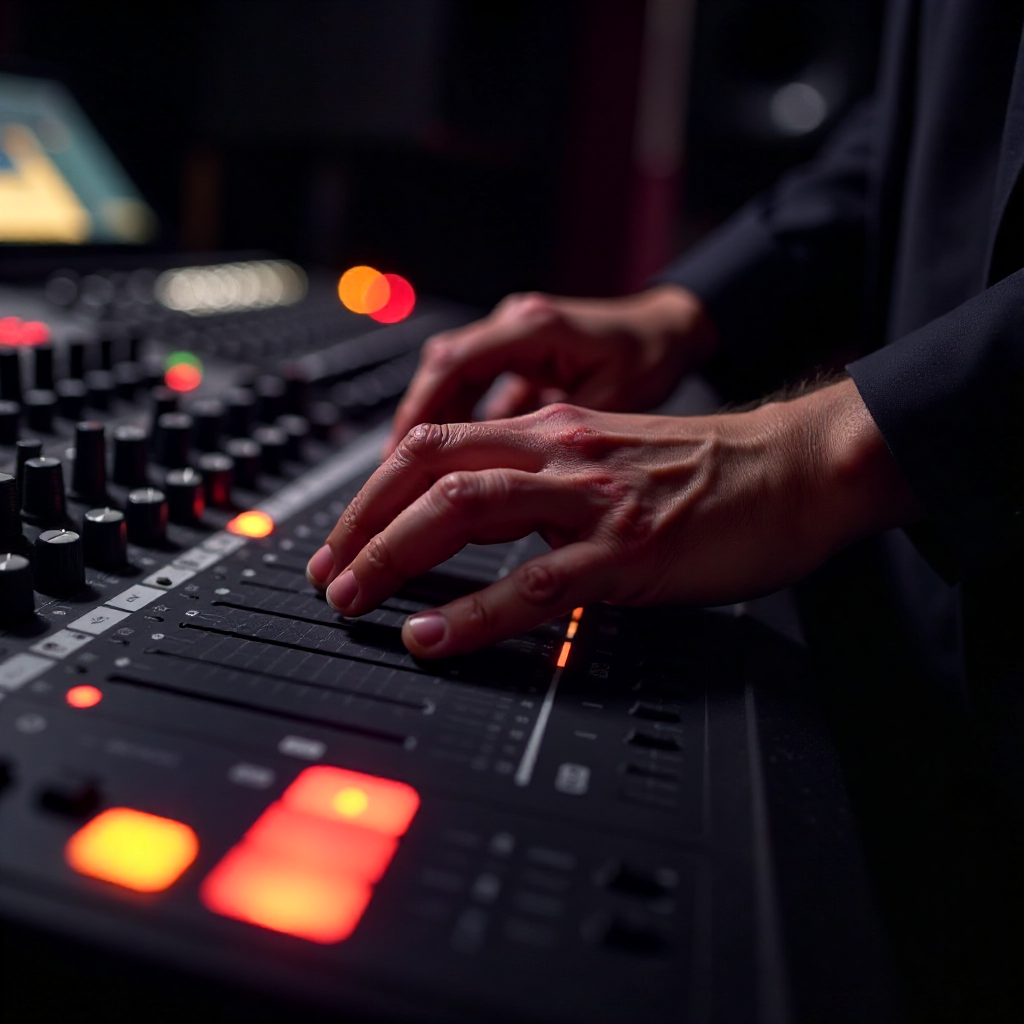
What It Really Takes to Succeed as a Music Producer
Success in music production requires a combination of technical skill, emotional intelligence, and the ability to keep showing up when nothing is clicking. There's no shortcut through the unglamorous middle.
The technical side — learning a DAW, understanding signal flow, developing an ear for mixing and mastering — takes years of consistent practice. But plenty of technically skilled producers never break through because they underestimate everything else: communication, patience, resilience, and the ability to serve the song rather than their own ego.
Creative blocks are real and universal. Every producer, regardless of their discography, hits stretches where nothing sounds right and motivation disappears. The ones who last learn to work through it rather than wait for inspiration to return on its own. Sometimes that means finishing something bad on purpose. Sometimes it means stepping away entirely for a day.
The career path is also genuinely nonlinear. Some producers spend a decade building a reputation before their name appears on a major release. Others catch a break early and have to figure out how to sustain it. Neither path is more legitimate than the other.
What ties it all together is a genuine obsession with sound — the kind that makes you replay a snare hit fifteen times just to feel whether it sits right. That's not something you can manufacture. Either you have it or you develop it, slowly, through thousands of hours of listening and making.
FAQ: Music Production — Common Questions Answered
How many hours a day do music producers typically work?
There's no standard answer, but a 10-to-14-hour day is common during active project phases. The hours are rarely consistent — some days are packed with back-to-back sessions, others involve a few focused hours of solo work. The job doesn't follow a 9-to-5 structure.
Do music producers need formal music education?
Formal education can help, but it's not required. Many successful producers are self-taught, learning through experimentation, online resources, and mentorship. What matters more is a deep understanding of music theory, arrangement, and sound — however that knowledge was acquired.
What software do most music producers use?
The most widely used music production software includes Ableton Live, FL Studio, Logic Pro, and Pro Tools. Each has strengths depending on genre and workflow. Most producers settle on one primary DAW and build their process around it, supplementing with third-party plugins for specific sounds.
How do music producers get paid?
Producers typically earn through a combination of upfront fees (a flat rate per track or session), producer points (a percentage of royalties from a release), and sync licensing fees when music is placed in media. The structure varies significantly between independent and label-backed projects.
Can you be a music producer without a professional studio?
Absolutely. The rise of affordable home studio setups — a decent computer, audio interface, studio monitors, and a DAW — has made professional-quality production accessible without renting expensive studio time. Many chart-topping tracks have been produced entirely in bedroom studios. The room matters less than the ears and the work ethic behind them.